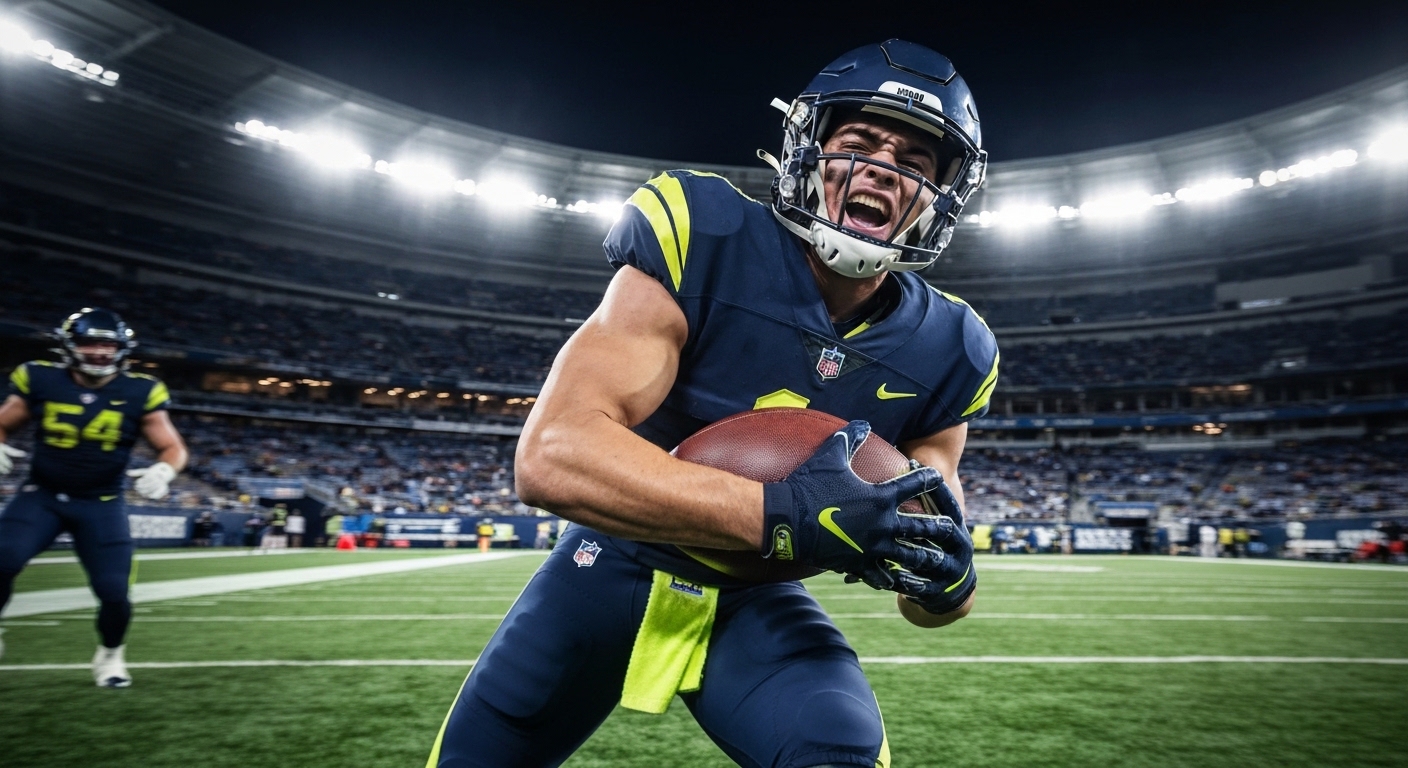
How NFL Teams Find Value Day 2 2026 Draft: The Playbook
The first round of the NFL Draft is the red carpet event. It’s where franchise-altering quarterbacks find their new homes and can’t-miss prospects shake the commissioner’s hand. But while Thursday night grabs the headlines, Friday night is where championships are forged. This is the core of the draft, and it’s where we’ll dissect how NFL teams find value on Day 2 of the 2026 Draft. This isn’t about luck; it’s about a meticulously crafted playbook.
This guide goes beyond mock drafts to reveal the mindset, scouting techniques, and strategic chess moves that allow savvy front offices to unearth Pro Bowl talent in the second and third rounds. While Day 1 is about landing a superstar, Day 2 is about building a super team.
Why Day 2 of the NFL Draft is Where Champions Are Built
The first round is for plugging the most glaring holes with the most polished players. But a 53-man roster isn’t built on 1st-round picks alone. Day 2, encompassing rounds two and three, is where general managers and scouting departments truly earn their paychecks. This is the territory for acquiring high-quality starters, essential role-players, and developmental prospects who can become future stars.
The purpose of this article is to pull back the curtain on this critical process. We will explore the philosophical shift from Day 1 to Day 2, the specific traits scouts hunt for in undervalued players, and the strategic maneuvering that defines the middle rounds. Finding value here is a repeatable skill, a combination of deep evaluation and calculated risk that separates the good teams from the great ones.
The Day 2 Mindset: Shifting from Superstars to Starters
Once the clock runs out on Round 1, a palpable shift occurs in every NFL war room. The pressure to land a “blue-chip,” plug-and-play, face-of-the-franchise talent subsides. The goal transitions from finding a single cornerstone to building the foundation and walls of the entire roster.
On Day 1, teams are often swinging for the fences, targeting players with the highest ceilings and cleanest prospect profiles. These are the athletes who have been scrutinized for years and are widely considered safe bets to become high-impact players.
On Day 2, the philosophy becomes more nuanced. The new objectives are:
- Find Immediate Starters: Identify players who can start Week 1 at positions of need, even if they don’t have the All-Pro ceiling of a top-10 pick. This could be a rock-solid offensive guard, a reliable possession receiver, or a technically sound cornerback.
- Acquire High-Upside Projects: Target players with one or two elite, uncoachable traits (like rare speed or size) but who may be raw in other areas. The coaching staff is trusted to develop their technique and unlock their potential.
- Add Critical Depth and Special Teams Aces: Every pick is an asset. A third-round safety who becomes a special teams captain and a reliable backup is an enormous win, freeing up cap space and solidifying the roster’s floor.
The classic “Best Player Available vs. Need” debate also evolves. On Day 2, these two concepts merge. A team is more likely to draft for a specific need, but only if the player available meets a certain quality threshold on their draft board. It’s about finding the intersection of talent and opportunity.
The Scout’s Playbook: How to Identify Undervalued Day 2 Talent
So, what separates a Day 2 prospect from a Day 1 lock? And how do scouts spot the hidden gems? It comes down to identifying players who are undervalued by the consensus for specific, and often correctable, reasons. A “Day 2 gem” typically falls into one of these categories.
The “Elite Trait, Needs Polish” Prospect
This is the classic high-upside gamble. The player might be a phenomenal athlete with a 99th-percentile 40-yard dash or an offensive lineman with rare length and power. However, their technique is raw, their footwork is inconsistent, or their route tree is limited.
- Scout’s View: The front office isn’t drafting the player as they are today; they’re drafting the player they can become in two years. The key question scouts and coaches must answer is: “Is this flaw correctable with our coaching staff?” If the answer is yes, you have a potential steal.
The Small-School Dominator
Some of the most productive players in the NFL come from FCS or Group of Five programs. These players often get overlooked because the level of competition they faced is questioned. Did he dominate because he’s a future pro, or because he was playing against future accountants?
- Scout’s View: Scouts do extra homework here. They analyze the player’s performance at showcase events like the Senior Bowl, where they compete directly against top talent. They look for traits that translate to any level: speed, power, instincts, and work ethic. If a player from a small school shows he belongs, he can be incredible value.
The Player with Minor “Red Flags”
A red flag can cause a first-round talent to slide. This could be a past injury (but with a positive medical report), a single, isolated off-field issue that has been thoroughly vetted and explained, or a “tweener” label where a player doesn’t have a classic, well-defined position.
- Scout’s View: This is about risk assessment. The team’s medical staff, security team, and psychologists are heavily involved. If they can get comfortable with the risk—believing an injury won’t recur or that a player has matured—they can land a top-20 talent with the 50th pick.
The Scheme-Specific Specialist
Sometimes a player isn’t a perfect fit for every team, but he’s a perfect fit for one team’s specific offensive or defensive scheme. A slightly undersized but incredibly quick edge rusher might not work in a 4-3 defense but could be a Pro Bowl outside linebacker in a 3-4 scheme that asks him to rush the passer 80% of the time.
- Scout’s View: This is where the synergy between the scouting department and the coaching staff is paramount. Coaches define the exact traits they need for their system, and scouts go find them, even if those players don’t fit the traditional mold for their position.
Strategic Maneuvering: The Chess Match of Rounds 2 and 3
Having a well-stacked draft board is only half the battle. Day 2 is a fast-moving, high-stakes game of resource management. General managers are constantly on the phone, working to maximize the value of every single pick.
Here are the key strategies teams employ:
-
Trading Up for a Falling Star: If a player with a first-round grade on a team’s board unexpectedly starts to fall into the second round, the GM will get aggressive. They’ll use a trade value chart to package a later pick (or two) to move up and grab “their guy” before someone else does. These charts, like the classic Jimmy Johnson model or the more modern Rich Hill model, assign a point value to every pick, creating a mathematical framework for negotiating trades.
-
Trading Down to Accumulate Assets: Conversely, if a team has multiple needs or doesn’t love the players available at their spot, they can trade back a few positions. In doing so, they acquire additional picks in the middle or later rounds. This strategy is about playing the odds: more picks mean more chances to hit on a quality player. This is a favorite tactic of teams that trust their scouting process to find value deeper in the draft.
-
Anticipating Positional Runs: War rooms are equipped with sophisticated software and analysts tracking which players and positions are being selected. If there’s only one starting-caliber center left on the board and three teams ahead of you need one, it might be time to trade up. If you see a deep pool of wide receivers, you can wait, confident that a good one will be there at your next pick.
-
Exploiting Positional Value: Smart teams understand that not all positions are created equal. Finding a 10-year starter at offensive tackle or cornerback in the third round is franchise-altering. Finding a backup running back in the second round is often seen as poor resource allocation. Teams that consistently win on Day 2 draft premium positions (QB, OT, Edge, CB, WR) or find starters at less-glamorous but vital spots like guard and center.
Case Studies in Day 2 Excellence: Learning from Past Successes
The theory sounds great, but the proof is on the field. History is filled with Day 2 picks who became the backbone of championship contenders.
DK Metcalf, WR, Seattle Seahawks (Pick 64)
- Why He Fell: Metcalf put on a show at the Combine with his size and speed, but a shockingly poor performance in the 3-cone drill raised major red flags about his agility and ability to run a full route tree. He was labeled a “straight-line runner” who couldn’t change direction.
- How Seattle Found Value: The Seahawks’ scouts and coaches looked past the one drill number and focused on the game tape, where Metcalf consistently used his physical gifts to dominate SEC cornerbacks. They bet on his elite traits (size, speed, strength) and believed they could build a scheme around what he did well, rather than worrying about what he couldn’t. They saw a unique weapon, not a flawed prospect.
Creed Humphrey, C, Kansas City Chiefs (Pick 63)
- Why He Fell: Despite being a dominant, multi-year starter at a powerhouse program (Oklahoma), centers are rarely valued as first-round picks. Humphrey was seen as a high-floor, lower-ceiling prospect who simply played a less-premium position.
- How Kansas City Found Value: The Chiefs, fresh off a Super Bowl loss where their offensive line was decimated, prioritized protecting Patrick Mahomes. They understood the immense value of a high-IQ, plug-and-play center to anchor their line for a decade. They ignored positional “glamour” and drafted a foundational piece who became an All-Pro almost immediately, representing incredible value at the end of the second round.
Cooper Kupp, WR, Los Angeles Rams (Pick 69)
- Why He Fell: Two primary reasons: he played at a smaller school (Eastern Washington) and was considered an average athlete by NFL standards. His 40-yard dash time was pedestrian, and scouts questioned if his record-setting college production could translate against elite NFL athletes.
- How Los Angeles Found Value: The Rams, under coach Sean McVay, valued intelligence, precise route-running, and reliable hands above pure athleticism. Their scouts saw a player with an elite football IQ who understood how to get open against any coverage. They correctly identified that his technical mastery and work ethic were the traits that would lead to success, making him a perfect fit for their system.
Conclusion: How to Watch Day 2 of the 2026 NFL Draft Like a GM
As you settle in for Day 2 of the 2026 NFL Draft, you’re now equipped to watch it like a true insider. Look beyond the names being called and analyze the strategy behind each selection.
Finding value is a systematic process. It’s the culmination of thousands of hours of scouting, a deep understanding of scheme fit, a willingness to trust analytics and medicals over hype, and the courage to make bold trades. The teams that consistently win in April are the ones that have a clear plan and execute it with precision when the clock is ticking.
So, this year, pay attention to the trades. Notice the player who dominated at a small school or the one with elite athletic traits but raw technique. Ask yourself: Is this team filling a need, or are they grabbing a falling player they have a first-round grade on? By doing so, you’ll see that the real action, the building of a champion, truly happens long after the Day 1 lights have dimmed.
Frequently Asked Questions
Why is Day 2 of the NFL Draft considered so crucial for building a team?
Day 2, encompassing Rounds 2 and 3, is where many NFL champions find foundational starters and key contributors, not just superstars. Teams often secure players who can immediately impact the roster and provide significant value relative to their draft position. This phase is critical for filling out depth and finding long-term solutions that contribute to sustained success.
What is the ‘Day 2 mindset’ for NFL teams when evaluating prospects?
The Day 2 mindset shifts from targeting elite, franchise-altering superstars to identifying high-upside starters and reliable role players. Teams prioritize players who fit specific scheme needs, possess strong football character, and demonstrate a clear path to contributing early in their careers. It’s about finding immediate impact players who offer significant value without the top-tier draft capital.
How do scouts identify ‘undervalued’ talent on Day 2?
Scouts identify undervalued talent by focusing on specific traits, scheme fit, and potential for development rather than just raw athleticism or college production. They look for players who might have minor flaws but possess elite skills in certain areas, strong work ethic, and a high football IQ. Extensive film study, interviews, and medical evaluations are crucial to uncover these hidden gems.
What strategic maneuvers are common for teams during Rounds 2 and 3?
During Rounds 2 and 3, teams often engage in strategic trades to move up or down the board to secure specific targets or accumulate more picks. They might also target players who slipped out of Round 1 due to minor concerns, or focus on positions where depth is critically needed. This phase is a chess match of balancing immediate roster needs with long-term team building.
Can you provide examples of successful Day 2 draft picks?
While specific examples for the 2026 draft are yet to be determined, historically, many Pro Bowlers and Super Bowl champions have emerged from Day 2. These players often include quarterbacks who develop into starters, dominant defensive linemen, or versatile offensive weapons. Their success highlights the importance of thorough scouting and strategic drafting in the middle rounds.