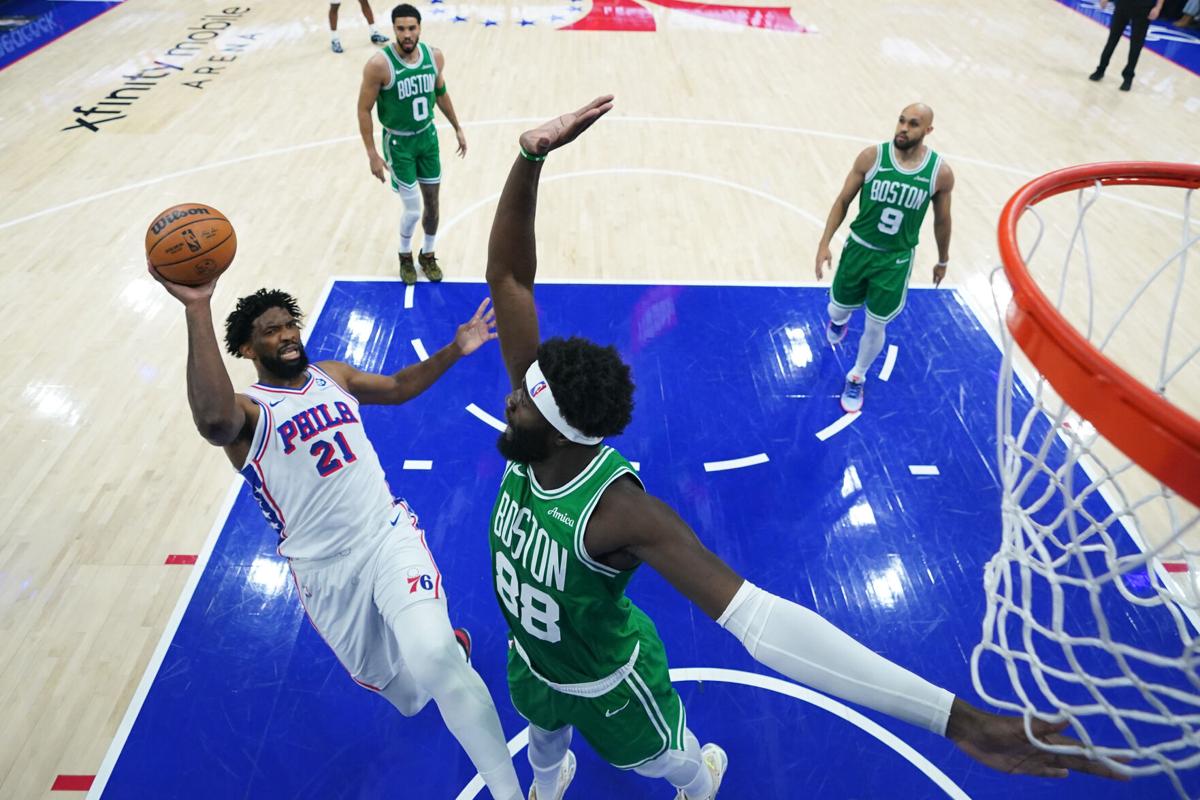
The Philadelphia 76ers defeated the Boston Celtics 106-93 to force a winner-take-all Game 7 in their Eastern Conference semifinal matchup. Philadelphia dominated the middle quarters, outscoring Boston by 22 points across the second and third frames to erase a 3-1 series deficit. This victory shifts the 76ers vs Celtics NBA playoff momentum back to Boston, where the Celtics will attempt to avoid a historic collapse on their home floor.
When did the 76ers take control of the game?
The turning point occurred during a decisive four-minute stretch late in the third quarter. While the 76ers force Celtics into uncomfortable perimeter shots, Boston went scoreless for over four minutes, allowing Philadelphia to build an 82-63 lead.
The Run: Philadelphia utilized a 62-40 scoring surge across the middle periods.
The Response: Celtics coach Joe Mazzulla conceded the game with 10:22 remaining in the fourth quarter by subbing out his starters.
The Result: Despite a late 30-14 "garbage time" run by Boston’s reserves, the 76ers’ lead remained insurmountable due to their disciplined transition defense.
Why did Philadelphia’s strategy beat Boston in Game 6?
The 76ers won because they prioritized offensive balance and exploited Boston’s defensive rotations. Unlike previous games where the offense stagnated around a single star, all five Philadelphia starters recorded 14 or more points.
Offensive Execution and Spacing
The 76ers vs Celtics matchup was decided by shot quality. Philadelphia recorded 24 assists, moving the ball to find high-percentage looks rather than settling for contested isos. Their Offensive Rating spiked during the second quarter as they targeted Boston’s smaller guards in the post, forcing help defenders to leave shooters open on the weak side.
Defensive Discipline
Philadelphia limited Boston’s Effective Field Goal Percentage (eFG%) by funneling Jayson Tatum and Jaylen Brown into the teeth of their defense. By staying home on shooters and forcing the Celtics to beat them with mid-range jumpers, Philadelphia neutralized Boston’s primary weapon: the corner three.
Which players dominated the 76ers vs Celtics Game 6?
Individual player performance was the primary differentiator, as Philadelphia’s stars outshined a struggling Boston core.
Tyrese Maxey: Maxey led all scorers with 30 points on 50% shooting. He exploited Boston’s "drop coverage" in the pick-and-roll, using his elite speed to get into the paint or pull up for triples.
Joel Embiid: Although his shooting was inefficient, Embiid’s "gravity" created space. He finished with 19 points, 10 rebounds, and 8 assists, acting as a high-post hub that dismantled Boston’s double teams.
Paul George: George contributed 23 points, providing a secondary scoring option that prevented Boston from over-helping on Embiid.
Quentin Grimes: Off the bench, Grimes provided elite point-of-attack defense, holding Boston’s guards to 4-of-12 shooting when he was the primary defender.
Why did Jayson Tatum and the Celtics offense collapse?
The Celtics' failure stemmed from an over-reliance on three-point volume and a lack of interior scoring. Boston attempted 41 three-pointers but converted only 12 (29.3%). When the perimeter shots stopped falling, the team lacked a "Plan B" to generate points in the paint.
Jayson Tatum’s struggles were a major factor in this 76ers vs Celtics game 6 outcome. Tatum appeared to be managing a lower left leg injury, which impacted his first-step quickness and lift on his jumper. His inability to finish at the rim allowed Philadelphia to stay in a "single-coverage" defensive scheme, preventing the drive-and-kick sequences that usually fuel Boston’s offense.
What are the key NBA stats from Game 6?
To understand how the 76ers force Celtics to a Game 7, one must look at the efficiency gap:
Three-Point Shooting: PHI 42% vs. BOS 29%
Points in the Paint: PHI 44 vs. BOS 32
Assists: PHI 24 vs. BOS 18
Fast Break Points: PHI 16 vs. BOS 9
The data confirms that Philadelphia played with a higher Pace and better ball security, preventing Boston from getting easy transition buckets that usually ignite the TD Garden crowd.
What adjustments will decide Game 7 in Boston?
As the series moves to a winner-take-all finale, both teams must address glaring tactical weaknesses revealed in Game 6.
Boston’s Shot Selection: The Celtics must find ways to attack the rim. If they continue to settle for 40+ threes while shooting under 30%, they will likely lose. Look for Jaylen Brown to take a higher Usage Rate if Tatum remains hampered.
Philadelphia’s Bench Rotation: The 76ers found success with Quentin Grimes and need to maintain that defensive pressure. They must also manage Joel Embiid’s fatigue, as his playmaking drops significantly when he plays more than 10 consecutive minutes.
The Health Factor: Jayson Tatum’s leg injury is the most critical variable. If he cannot draw double teams, Philadelphia will continue to play "straight up," making it difficult for Boston’s role players to get open looks.
What is the deeper takeaway?
The 76ers force Celtics to a Game 7 by proving that tactical versatility outweighs volume shooting in the playoffs. This series highlights the volatility of the modern NBA; a 3-1 lead is no longer safe when a team becomes one-dimensional.
The winner of Game 7 will be the team that successfully dictates the Pace and forces the opponent out of their preferred shooting zones. All eyes now turn to Boston for what promises to be the most intense game of the 76ers vs Celtics NBA playoff calendar.