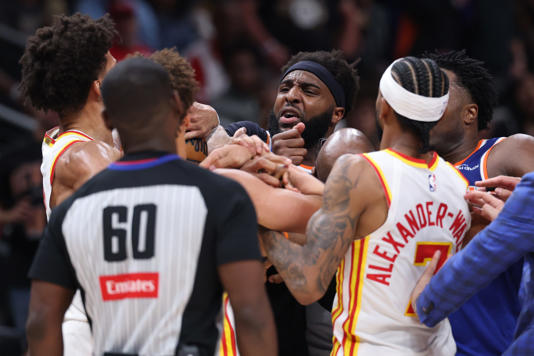
What happened in the Dyson Daniels and Mitchell Robinson ejection?
The officials ejected Dyson Daniels and Mitchell Robinson after a physical confrontation during a high-stakes Eastern Conference matchup between the Atlanta Hawks and the New York Knicks. The incident occurred in the second quarter when Robinson’s aggressive screen-setting met Daniels’ tight point-of-attack defense, resulting in a scuffle that forced the removal of both teams' primary defensive anchors.
This double ejection immediately altered the game’s tactical landscape, shifting the focus from defensive grit to a high-paced offensive shootout.
Why were Dyson Daniels and Mitchell Robinson ejected?
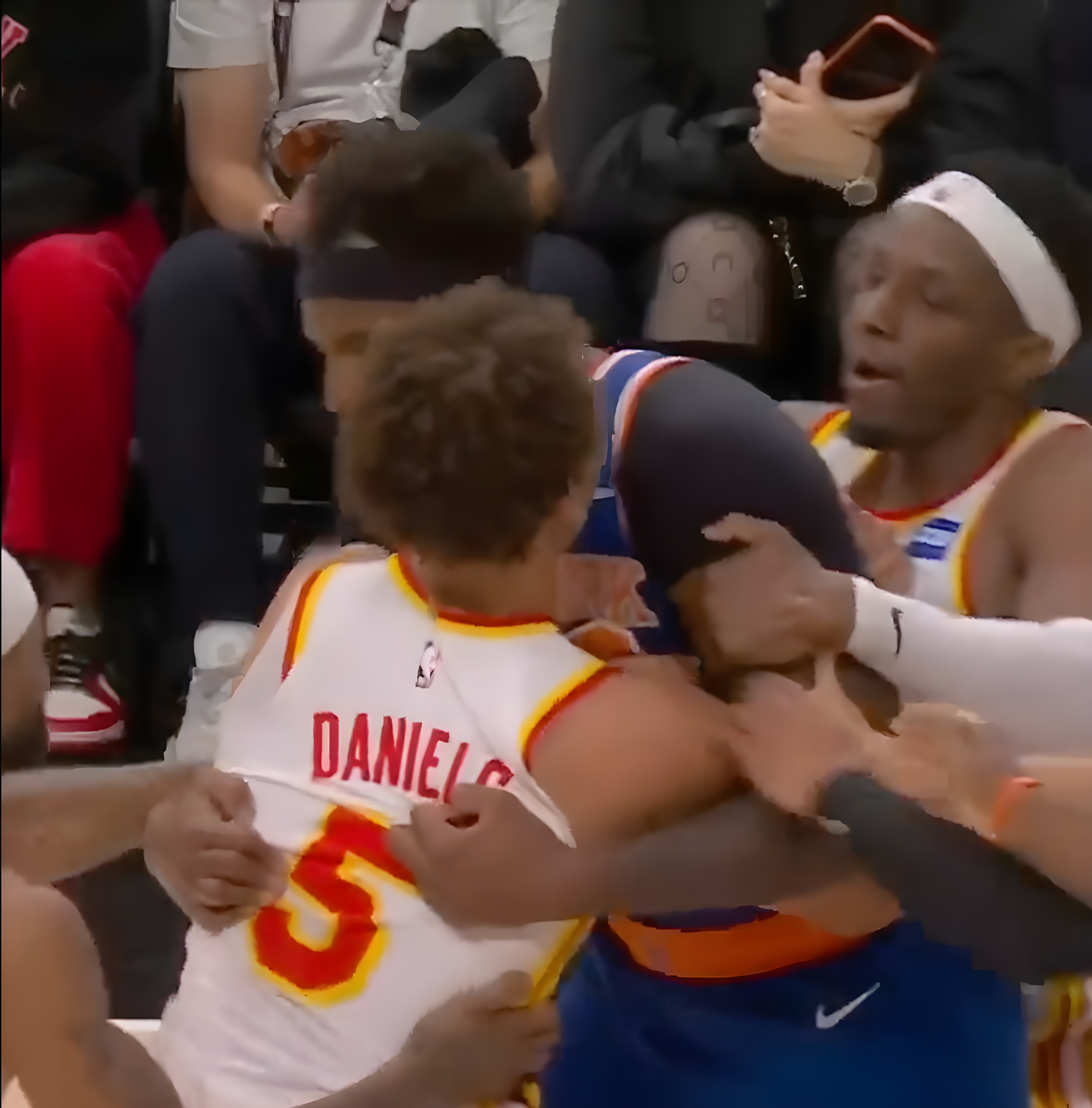
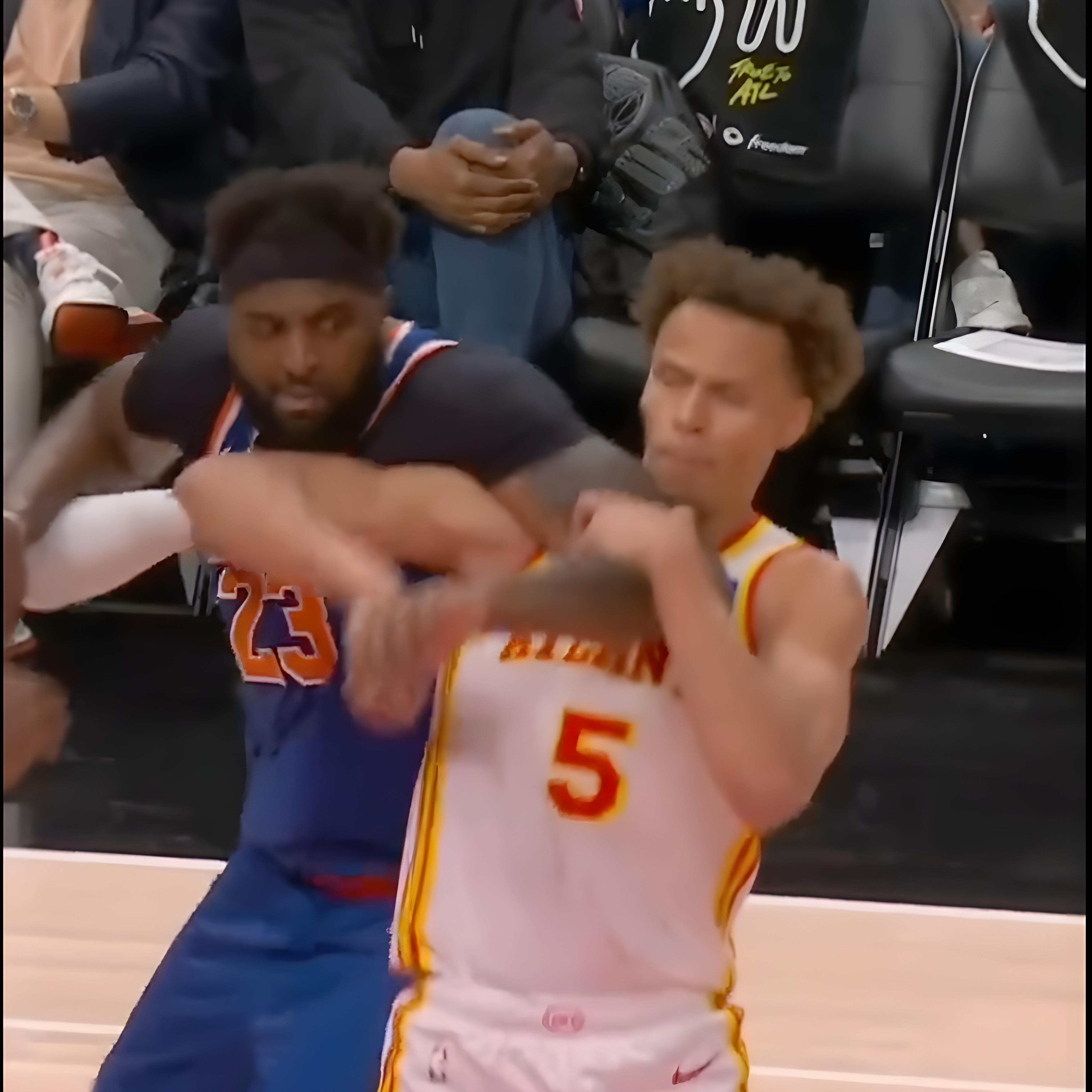
The ejection resulted from a "Hostile Act" ruling following a dead-ball altercation. The conflict began when Mitchell Robinson attempted to clear space on an off-ball screen, leading to an elbow exchange with Dyson Daniels. According to the NBA Rulebook, any player who intentionally strikes or shoves an opponent above the shoulders is subject to an automatic Flagrant 2 or a double technical with ejection.
The officials spent several minutes at the replay monitor reviewing the "trigger" of the fight. They determined that both players escalated the contact beyond "basketball moves," leading to the decision to remove them to prevent further game-day volatility. This decision was largely influenced by the league’s current emphasis on curbing non-basketball physical escalations during the 2024-25 season.
How did the ejections impact team strategy and rotations?
The removal of Daniels and Robinson forced both head coaches to abandon their primary defensive schemes. The Atlanta Hawks lost their leader in Deflections (7.6 per 36 minutes), forcing them to rely on a smaller, less versatile perimeter rotation. Without Daniels’ ability to disrupt the Knicks' primary ball-handlers, New York’s Offensive Rating (ORTG) spiked as they found easier paths to the paint.
For the Knicks, the loss of Mitchell Robinson compromised their interior integrity. Robinson currently ranks among the league leaders in Contested Shots at the Rim, and his absence left a vacuum in New York’s rebounding.
Knicks Adjustment: New York pivoted to a "small-ball" lineup, increasing their Pace to exploit Atlanta’s weakened transition defense.
Hawks Adjustment: Atlanta increased their zone defense usage to hide perimeter mismatches created by Daniels’ absence.
Which players performed best after the incident?
The player performance of the remaining starters dictated the final result. With the defensive "stoppers" gone, the game’s True Shooting Percentage (TS%) rose significantly.
Jalen Brunson (Knicks): Exploited the lack of Daniels’ length, finishing with 31 points and 9 assists. He attacked the drop coverage that Atlanta was forced to run without their best wing defender.
Trae Young (Hawks): Capitalized on Robinson’s absence by relentlessly attacking the rim. Without a premier shot-blocker looming, Young’s finishing at the cup improved from 45% to 62% for the remainder of the game.
Bench Impact: Reserve centers for both teams saw a 15% increase in Usage Rate, though neither could match the defensive win shares (DWS) provided by the ejected starters.
What do the NBA stats reveal about the game’s turning point?
If you look at the numbers, the game shifted from a defensive grind to an offensive track meet. Before the ejections, the game was played at a Pace of 94.5; following the incident, the pace accelerated to 102.1.
Metric
With Daniels/Robinson
After Ejection
Points in the Paint
12
44
Defensive Rating (DRTG)
104.2
118.9
Fast Break Points
4
18
This data suggests that both teams are heavily dependent on their "enforcer" archetypes to maintain defensive structure. The NBA stats confirm that the loss of a rim protector (Robinson) is statistically more damaging to a team's net rating than the loss of a perimeter defender (Daniels) in a single-game sample size.
What is the future outlook and suspension risk?
The league office will review the footage to determine if further disciplinary action is required. Under the current Collective Bargaining Agreement (CBA), a one-game suspension is typically reserved for players who throw closed-fist punches or leave the bench area.
What to watch next:
League Review: Monitor the NBA Communications Twitter/X feed for fine announcements (typically ranging from $25,000 to $50,000).
Rotation Shifts: If Robinson faces a suspension, the Knicks' rebounding margin will be a critical stat to track in their next matchup.
Rematch Tension: The next Hawks-Knicks game will likely see increased officiating scrutiny to prevent a repeat of this physical escalation.
What is the deeper takeaway?
The Dyson Daniels and Mitchell Robinson ejection serves as a reminder of how quickly individual matchups can dismantle a team's tactical identity. While the Hawks showed they can score in bunches, their reliance on Daniels for perimeter stops is a clear vulnerability.
Conversely, the Knicks demonstrated that while their "Next Man Up" offense is potent, their elite defense begins and ends with Robinson’s presence in the restricted area. Fans should pay close attention to how these teams address their lack of defensive depth as the playoff standings tighten.