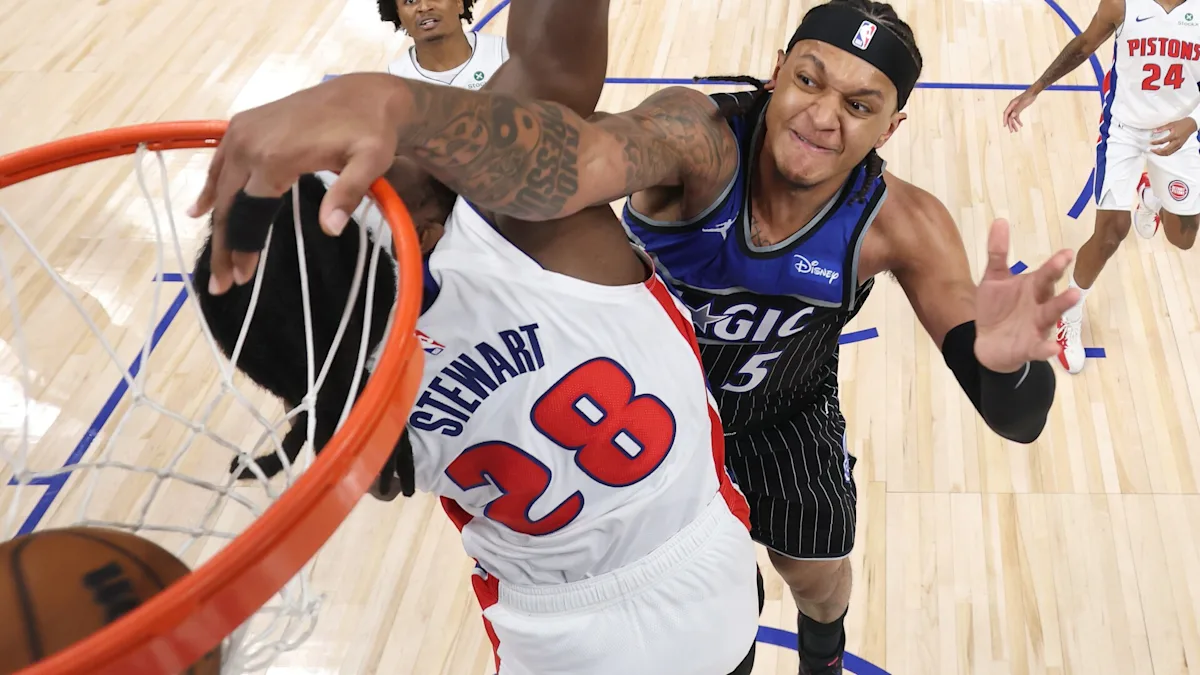
What happened in Pistons vs Magic Game 3?
What happened in Pistons vs Magic Game 3? The Orlando Magic defeated the Detroit Pistons 108-98 in a defensive battle that shifted the Eastern Conference playoff standings. This Pistons vs Magic Game 3 recap and analysis highlights how Orlando reclaimed a 2-1 series lead by neutralizing Detroit’s backcourt and dominating the offensive glass.
The game exposed critical flaws in Detroit's half-court execution. With the series tied, Orlando adjusted their defensive coverages, held Detroit to just 41% shooting from the field, and controlled the game's pace in the fourth quarter.
Key Game 3 Takeaways:
Final Score: Orlando Magic 108, Detroit Pistons 98.
Defensive Impact: Orlando restricted Detroit to 0.92 points per possession in the fourth quarter.
Rebounding Margin: The Magic out-rebounded the Pistons 48-36, generating 18 second-chance points.
Series Status: Orlando leads 2-1, reclaiming home-court advantage.
How did the game unfold from start to finish?
The game operated at a sluggish pace of 94.5 possessions, favoring Orlando’s half-court defensive scheme. Detroit established an early interior presence through Jalen Duren, scoring 24 points in the paint during the first half. However, Orlando systematically closed those driving lanes in the third quarter. The Magic utilized a switch-heavy defensive scheme that flattened Detroit’s ball movement and forced late-shot-clock isolation attempts.
What were the key turning points that left Detroit stunned?
The definitive turning point occurred during a 14-4 Orlando run midway through the fourth quarter. Detroit's offense stalled against Orlando's aggressive pick-and-roll traps. Jalen Suggs intercepted two perimeter passes, converting both into transition layups. Following a Detroit timeout, Franz Wagner executed a successful backdoor cut, pushing the Magic lead to 12 with under four minutes remaining and effectively ending Detroit's comeback hopes.
Why did Orlando win Game 3?
How did Orlando's defense disrupt Detroit?
The Magic won because head coach Jamahl Mosley altered his pick-and-roll coverage. Instead of playing drop coverage against Cade Cunningham, Orlando blitzed the screen. They forced Cunningham to pass the ball backwards, effectively resetting the shot clock with under 10 seconds left. This tactic dropped Detroit’s effective field goal percentage (eFG%) to a dismal 44% in the second half.
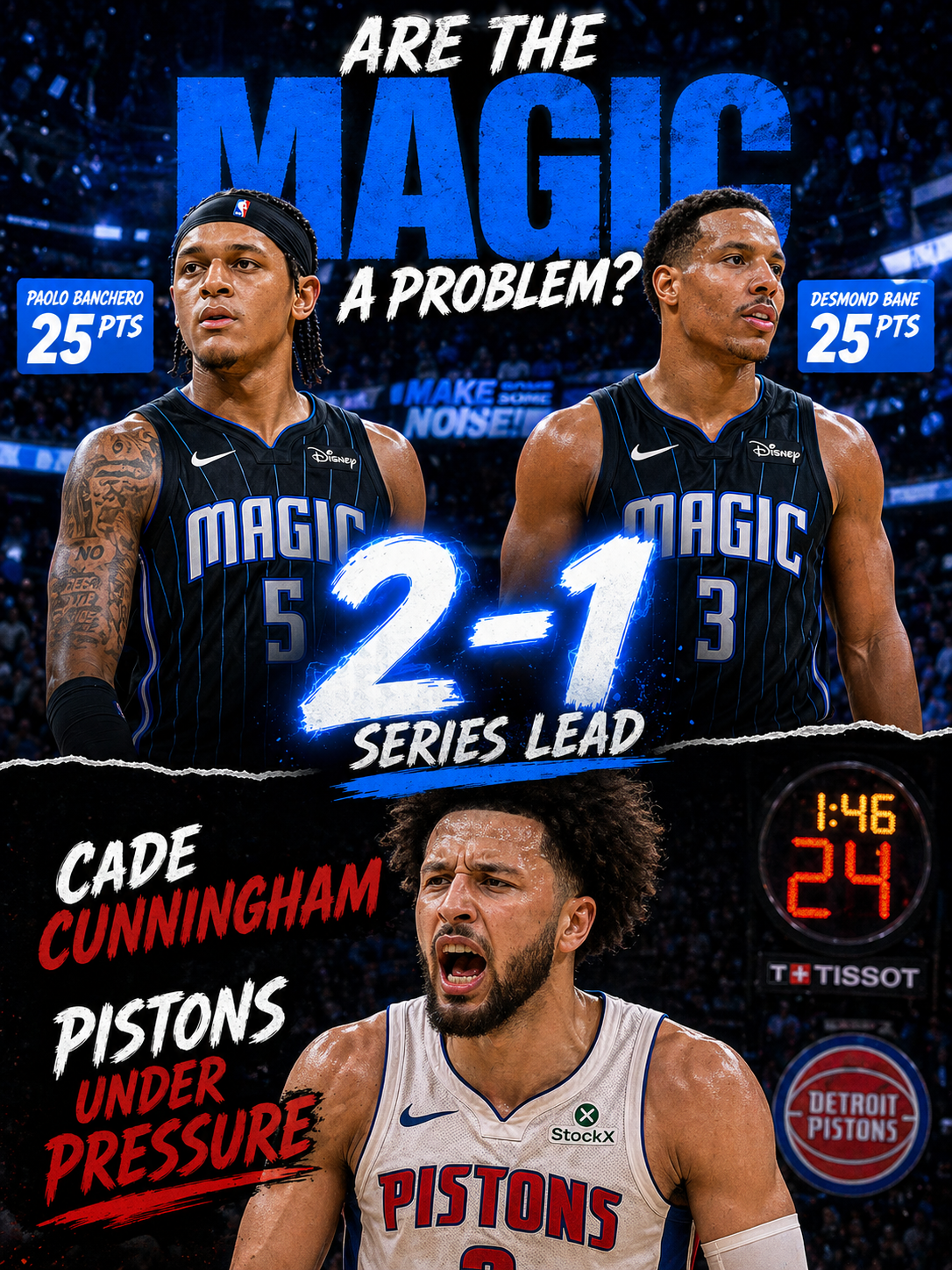
Why was Detroit's offensive execution poor?
Detroit failed to counter Orlando's traps due to poor floor spacing. The Pistons shot just 28.5% (8-for-28) from three-point range. Because Detroit's wings could not consistently hit uncontested corner threes, Orlando's weak-side defenders freely rotated into the paint to block Jalen Duren's roll to the basket. This lack of shooting gravity completely suffocated Detroit's offensive rating.
H2: Who were the standout players in Game 3?
How did Paolo Banchero impact the game?
Paolo Banchero controlled the offensive tempo for Orlando. He recorded 28 points, 8 rebounds, and 6 assists while posting a 58% true shooting percentage. Banchero attacked the mid-post, exploiting mismatches against smaller Detroit wings. When Detroit sent double-teams, he utilized a 28% usage rate to facilitate cross-court passes, generating open perimeter shots for his teammates.
Why did Cade Cunningham struggle late?
Cade Cunningham experienced extreme efficiency drops under playoff pressure. While he finished with 22 points and 8 assists, he shot just 4-of-14 in the second half and committed 6 turnovers. Cunningham struggled to process Orlando’s blitzes quickly enough. His inability to find the short-roller led directly to live-ball turnovers, which Orlando converted into fast-break points.
What strengths and weaknesses did Game 3 expose?
What advantages did Orlando exploit?
Orlando dominated the physical margins. They secured 14 offensive rebounds, exposing Detroit's poor weak-side box-outs. Furthermore, Orlando's bench depth provided a massive advantage. Cole Anthony and Moritz Wagner combined for 26 points, allowing Orlando to maintain a positive net rating even when Banchero rested.
What issues must Detroit fix?
Detroit lacks reliable secondary shot creation. When Orlando forced the ball out of Cunningham's hands, Jaden Ivey struggled to initiate the offense, finishing with a -14 plus-minus. Detroit also displayed poor transition defense. They repeatedly failed to match up after missed field goals, surrendering 22 fast-break points to a younger, more athletic Orlando roster.
How does Game 3 impact the NBA playoff standings?
What are the series advancement odds now?
This victory drastically alters the series trajectory within the playoff standings. Historically, teams that win Game 3 to take a 2-1 lead in a best-of-seven series advance 73% of the time. Orlando now holds both the mathematical advantage and tactical momentum, placing immense pressure on Detroit's coaching staff to formulate a response.
What are the implications for Game 4?
Game 4 becomes a functional elimination scenario for Detroit. Falling behind 3-1 before heading back to Orlando would likely end their season. Detroit must protect their home court, which requires significant adjustments to their offensive spacing and rotational minutes.
What happens next for the Pistons and Magic?
What tactical adjustments should Detroit make?
Detroit must adjust their screen angles and personnel. To counter the blitz, Detroit should use Isaiah Stewart as a floor-spacing center (pick-and-pop) rather than relying solely on Duren's rim-rolling. This adjustment forces Orlando's big men out of the paint. Additionally, Detroit must initiate their offensive sets earlier in the shot clock to avoid late-possession desperation shots.
Can Orlando sustain this defensive pressure?
Orlando possesses the length and youth to maintain this physical defensive scheme. Their deep rotation allows them to deploy fresh perimeter defenders—like Suggs and Jonathan Isaac—in short, high-intensity bursts. Unless Detroit forces Orlando into foul trouble early in Game 4, the Magic's defensive infrastructure remains highly sustainable.
Conclusion: What is the deeper Game 3 takeaway?
What does this reveal about the current NBA landscape?
This Pistons vs Magic Game 3 recap and analysis highlights the absolute necessity of two-way versatility in the modern NBA playoffs. Orlando's ability to seamlessly switch defensive assignments and punish turnovers illustrates why positional size dictates postseason success. Detroit possesses raw talent, but their lack of reliable perimeter shooting renders their offense easily solvable in a seven-game series.
What should fans watch for in Game 4?
Fans should monitor Detroit's first-quarter offensive sets. If Detroit continues to run traditional high pick-and-rolls without off-ball movement, Orlando will dictate the game. However, if Detroit increases their pace and attacks before Orlando's half-court defense sets up, they can level the series. The tactical chess match between Mosley and Detroit's staff will define the remainder of this series.