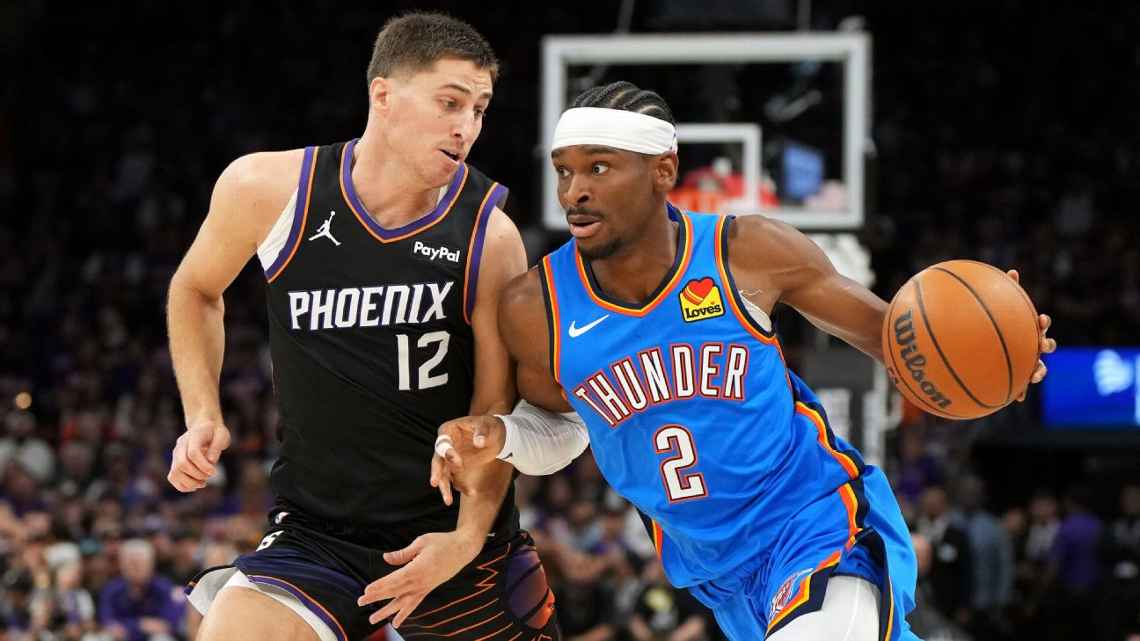
What happened during the Shai Gilgeous-Alexander 16/17 on fg streak?
What happened during Shai Gilgeous-Alexander's 16-game stretch?
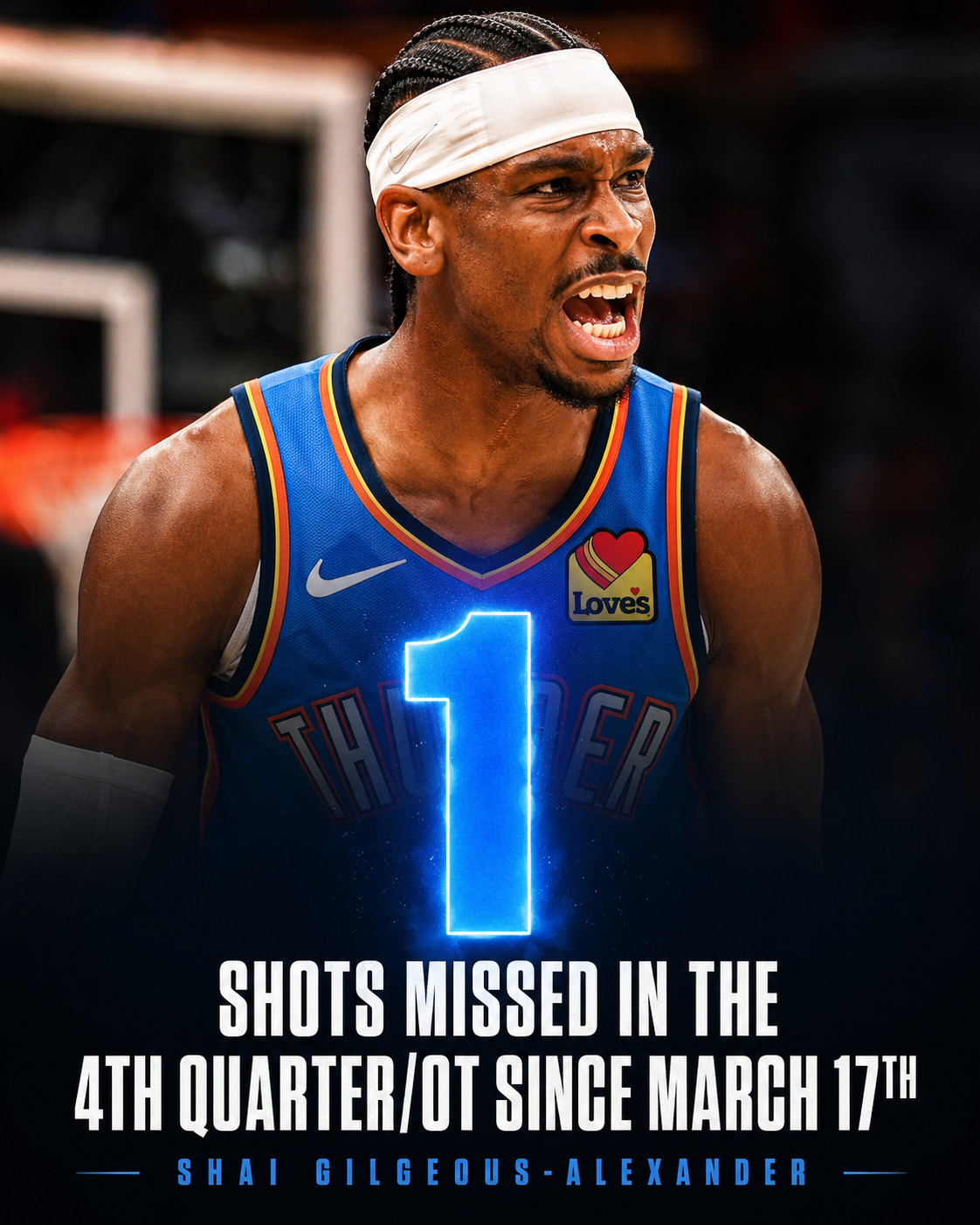
Oklahoma City Thunder guard Shai Gilgeous-Alexander converted 16 of 17 field goal attempts in the fourth quarter and overtime over a 16-game span to close the regular season. This historic Shai Gilgeous-Alexander clutch shooting performance secured the number one seed in the Western Conference playoff standings and cemented his NBA Clutch Player of the Year campaign.
By dominating late-game scenarios, he stabilized the Thunder's offense during critical possessions. He dictated the tempo against elite defensive matchups, generated consistent trips to the foul line, and removed high-variance perimeter shots from Oklahoma City's closing strategy.
Key Takeaways:
Historic Efficiency: He shot 94.1% (16-of-17) from the field and 87.8% (29-of-33) from the free-throw line in late-game situations since March 17.
True Shooting Mastery: Factoring in free throws, he recorded an unprecedented 96.7% True Shooting Percentage in the fourth quarter during this streak.
Clutch Volume: For the season, he led the NBA with 175 total clutch points and 16 go-ahead field goals in the final five minutes of close games.
Standings Impact: His late-game execution directly pushed Oklahoma City to the top of the Western Conference playoff standings.
Why did Shai Gilgeous-Alexander shoot 94% in the fourth quarter?
Shai Gilgeous-Alexander achieved a 94.1% fourth-quarter shooting mark by completely eliminating low-percentage jump shots and forcing defensive rotations through isolation drives. He recorded an elite True Shooting percentage by prioritizing rim pressure over contested jumpers.
The Thunder operated with a five-out offensive scheme. They placed shooters on the perimeter, which forced opposing big men out of the paint. Gilgeous-Alexander attacked these open driving lanes. Instead of settling for three-pointers, he utilized elite deceleration to reach his spots in the mid-range or directly at the restricted area.
When help defenders collapsed, he either converted high-percentage looks or drew shooting fouls. This specific player performance removed the variance of perimeter shooting from the Thunder's late-game offensive rating, allowing them to score consistently on every possession.
How did free throws impact this statistical anomaly?
The 16-of-17 shooting statistic is heavily influenced by Gilgeous-Alexander's ability to draw fouls, meaning missed attempts were officially erased by foul calls. During this 16-game stretch, he shot 29-of-33 from the free-throw line in the fourth quarter alone.
Surface-level NBA stats do not count a missed shot as a field goal attempt if the player is fouled. Opposing defenders could not stay in front of his drives without making physical contact. Rather than forcing difficult layups through traffic, Gilgeous-Alexander actively absorbed contact to guarantee trips to the charity stripe. Furthermore, because the Thunder blew out several opponents during this stretch, he sat out the fourth quarter entirely in seven of the 16 games.
This combination of high free-throw volume and resting during non-competitive minutes kept his official field goal attempts exceptionally low (17) while keeping his actual scoring output and efficiency historically high.
What defensive strategies failed against the Thunder's offense?
Opposing defenses failed because they utilized standard drop coverage and single-team matchups against the league's most efficient isolation scorer. Gilgeous-Alexander generated over 1.20 isolation points per possession (PPP), punishing teams that refused to send hard double-teams.
Teams attempted to limit the Thunder's pace by forcing half-court execution. However, Gilgeous-Alexander manipulated this slower pace. He targeted specific defenders in pick-and-roll actions, forcing switches onto slower centers or undersized guards. If a defense sent a late trap, he immediately passed out to open shooters, leveraging the Thunder's high team offensive rating.
Because defenses feared Oklahoma City's perimeter shooting gravity, they allowed Gilgeous-Alexander to operate one-on-one. He exploited this game analysis failure by consistently hitting 12-foot pull-ups, breaking traditional late-game defensive schemes.
Who were the key players enabling this late-game efficiency?
The Thunder achieved this late-game success because complementary players provided elite perimeter gravity, preventing defenses from collapsing on Gilgeous-Alexander. Jalen Williams and Chet Holmgren forced opposing defenses to stay attached to the three-point line.
Williams acted as a secondary shot creator. He attacked closeouts whenever defenses over-helped on Gilgeous-Alexander's initial drives. Meanwhile, Holmgren operated as a pick-and-pop threat. By dragging opposing rim protectors out of the paint, Holmgren removed the primary layer of help defense. The team maintained a low turnover rate, ensuring they maximized every fourth-quarter possession.
This team strategy allowed Gilgeous-Alexander to attack his primary defender in pure isolation. Defenses faced a mathematical dilemma: surrender a high-percentage drive to an elite scorer or give up an uncontested three-pointer to a 40% perimeter shooter.
What are the potential weaknesses in this clutch strategy?
The primary weakness in this strategy is its heavy reliance on free-throw generation, which historically decreases during physical playoff series. If referees alter their officiating standards, Gilgeous-Alexander's efficiency could experience a regression.
During the regular season, Gilgeous-Alexander drew fouls on a massive percentage of his late-game drives. Playoff basketball typically features a slower pace and allows for more physical point-of-attack defense. If officials allow defenders to hand-check or absorb contact in the paint without calling fouls, those previously erased missed shots will become live turnovers or empty possessions.
Oklahoma City must diversify their fourth-quarter playbook. While isolation scoring provides a high floor, the Thunder will need to incorporate more off-ball movement and secondary pick-and-roll actions to survive deep postseason runs against elite defensive fronts.
What does this clutch performance mean for the NBA playoff standings?
This high-efficiency late-game execution directly secured the number one seed for the Oklahoma City Thunder in the Western Conference playoff standings. Winning close games mathematically separates top-tier championship contenders from the play-in tournament bracket.
Playoff basketball inherently slows down. Teams must rely on half-court isolation scoring rather than fast-break transition points. Gilgeous-Alexander proved he can maintain a historically high True Shooting percentage even when the game pace drops and defensive intensity peaks. The Thunder proved they do not rely on high-variance three-point shooting to close games, which is a vital indicator of postseason success.
Moving forward, playoff opponents face a difficult tactical decision. They must either surrender open three-pointers to Thunder role players by double-teaming Gilgeous-Alexander, or play him straight up and risk a repeat of his 94% late-game shooting efficiency.
H2: Conclusion: What is the deeper NBA takeaway?
The ultimate takeaway is that Shai Gilgeous-Alexander redefined modern clutch efficiency by prioritizing rim pressure and foul generation over low-percentage perimeter shots. His 16-of-17 shooting stretch highlights a fundamental shift in how elite guards attack late-game scenarios.
Rather than settling for 30-foot contested jumpers, he manipulated defensive rules and floor spacing to guarantee high-value outcomes. The data proves that consistent mid-range execution and free-throw volume are far more reliable metrics for success than perimeter shooting when closing out tight games.
As the playoffs progress, teams will be forced to redesign their late-game defensive philosophies. Until opponents figure out how to defend his deceleration without fouling, Gilgeous-Alexander will remain one of the most effective fourth-quarter weapons in the NBA.